

Sco’s Eight Wonders
The Shanghai Cooperation Organization (SCO) included the India’s Statue of Unity Statue in the "SCO List of Eight Wonders". Each list that we see in has its own unique characteristics. This year, India invited all SCO members, including Pakistan, for the annual meeting of the SCO. The group has Nine countries and Three states that observe as part of the group.
Features of the SCO's 8 Wonders:
Statue of unity
The Statue of Unity is today the tallest statue in the world standing at over ‘182 meters’. Built on the 143rd birth anniversary of ‘’Sardar Vallabhai Patel’’, this monument is a tribute to the former home minister and deputy Chief minister of India. Built in 33 months with 90,000 tons of cement and 25,000 tons of iron, the statue is skillfully designed to withstand any harsh acts of nature. It is conveniently located on an island called ‘Sadhu’. Bet close to the Sardar Sarovar Dam on the Narmada River in Gujarat. The statue has five areas and three of them are accessible to the public. Interesting elements of the statue include a memorial garden, a museum and an audio-visual gallery. The statue and surrounding area covers an area of approximately 4.9 acres surrounded by a scenic artificially created lake ( Panchmuli lake aka ‘DYKE-3’).

Daming Palace in China
Daming Palace has been designated as a National Heritage Site of China. It is an imperial palace that belongs to the Tang Dynasty and is located in the capital city of Chang'an. For more than two centuries, this was the residence of the Tang emperors.
The main features of the palace include three main halls, namely Hanyuan Hall, Xuanzheng Hall and Zichen Hall. It has a gate known as Danfeng Gate at the central southern entrance. It's a massive gate with five-doorways.
A series of excavations and conservative work on the palace followed after the discovery of the Daming Palace site in 1957. The Daming Palace National Heritage Park was opened to the public on October 1, 2010. In the palace complex, there are exhibition halls that display cultural artifacts found at the site.

Navruz Palace in Tajikistan
Located on Ismail Somoni avenue near the Varzob River that runs through the city, the Navruz Palace is one of Tajikistan's best sights.
The four main halls in the foundation includes Guliston, didor , Zarandud and Arzhang. Navruz Palace also has a cinema, shopping center and night club. Lovers will find this place to be a very interesting site to enjoy and relax.
Also called Kohi Navruz, the idea behind this palace was to make it the national tea house of the Central Asian region. Later, it became the National handicrafts of Tajikistan. In more than four hectares, the palace includes a summer lounge, fountain, art gallery, bowling, billiards, 3D, teahouse, and garden. It is said that around 4,000 artisans from all over Tajikistan were involved in the decoration of the building. Visitors can admire the beautiful wood carvings on the roof and walls, the paintings on the roof and the large dome, the largest of which reaches forty meters.
The Mughal Legacy ( Heritage ) in Pakistan
The heritage sites of the Mughal era in Pakistan are among the most beautiful members of the SCO Eight Wonders. The two most famous palaces that we see in Pakistan belong to the Mughal era are the Fort and Shalimar Gardens in Lahore. The fort is located near the northwest corner of the walled city of Lahore. It has 21 monuments dating back to Akbar's time. This fort has been destroyed and rebuilt many times throughout history. An example of a Mughal garden, Shalimar Garden was created by Emperor Shah Jahan in 1642. The 16 hectare garden with Persian and Islamic architecture.
Tamgaly Gorge in Kazakhstan
One of the most visited heritage places in Kazakhstan, Tamgaly Gorge is a unique place of ancient rock carvings. These are among the oldest monuments in the country called petroglyphs. The most spectacular place of Semirechye, there are 5000 paintings here, including images of gods, soldiers, married couples, and scenes of animal sacrifices and hunting.
Most of these designs are from the so-called Bronze Age. This place is also home to many old graves. It is also a UNESCO World Heritage Site.
Po-I-Kalan complex in Uzbekistan
The building of Poi Kalan in Uzbekistan is located in the center of Bukhara. The most impressive feature of this monument is the Kalan minaret which rises to a height of 50 meters visible from any place in Bukhara. The Arabs started building this site in 713 when they came here to spread Islam. Although the garden was destroyed and rebuilt several times, the minaret survived Mongol invaders, fires and earthquakes. The diameter of the minaret is 9 meters at the base and 6 meters at the top. The 104-step staircase has been polished by millions of feet visited by people so far. In the past, criminals and cheating wives were killed there.
The city of the Golden Ring of Russia
Created during the Soviet era, the Golden Ring of Russia is a tourist route intended to increase the number of foreign tourists visiting the country. Today, we see gold rings that are often used by visitors and travelers from Russia.
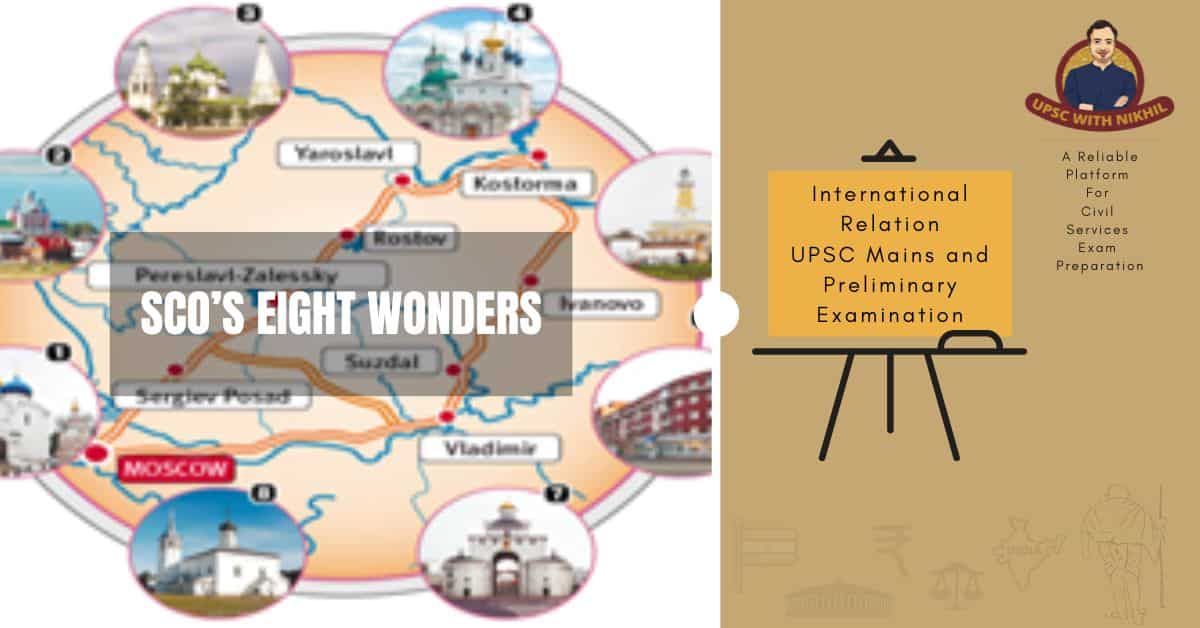
The eight main cities that make up the Golden Ring are Yaroslavl, Kostroma, Ivanovo, Suzdal, Vladimir, Sergiev Posad, Pereslavl-Zalessky and Rostov Veliky. The Golden Ring boasts of beautiful churches, golden domes and many other ancient and modern places of interest.
Kyrgyzstan - Lake issyk-kul
The seventh deepest pool ( lake ) also the 10th largest pool in terms of volume, its located in the Northern Tian Shan Mountains in the eastern Kyrgyztan. The word means a warm lake. Although the lake is surrounded by snow-covered mountains, its water does not freeze.
Forming Part of the Issyk-Kul Biosphere Reserve, Lake Issyk-Kul is famous for its incredible biodiversity. The total area of the lake is 6,236 square kilometers. Located at a height of 1,607 meters above sea level, the lake reaches a depth of 668 meters. About 118 rivers and streams flow into this second largest mountain lake in the world.